- You do not have any products in your shopping cart yet.
How to preserve and store vintage Movie Posters
By Postercowboy on July 27, 2026Since the topic came up with a client once again today, I figured it‘s about time to write up a few thoughts on the proper preservation and storage of your vintage movie poster collection.
A few years ago, I listened to an art consultant (if that‘s what she was) talking about storing your art collection in an interview on Deutschlandradio. First thing she said was: If you are collector, you have a storage facility. If you do not have a storage space, and everything you own can be displayed on your walls, you are a decorator.
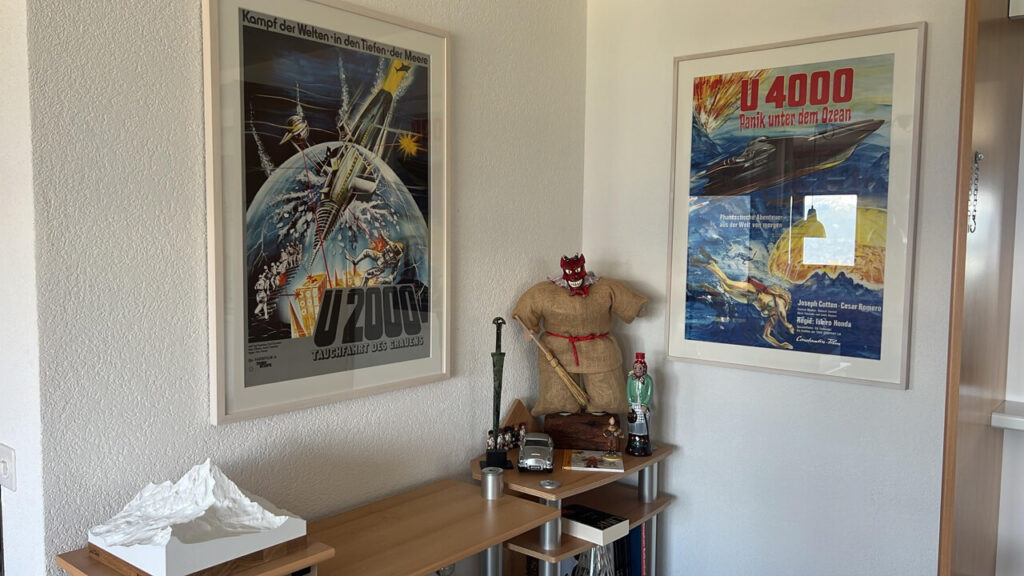
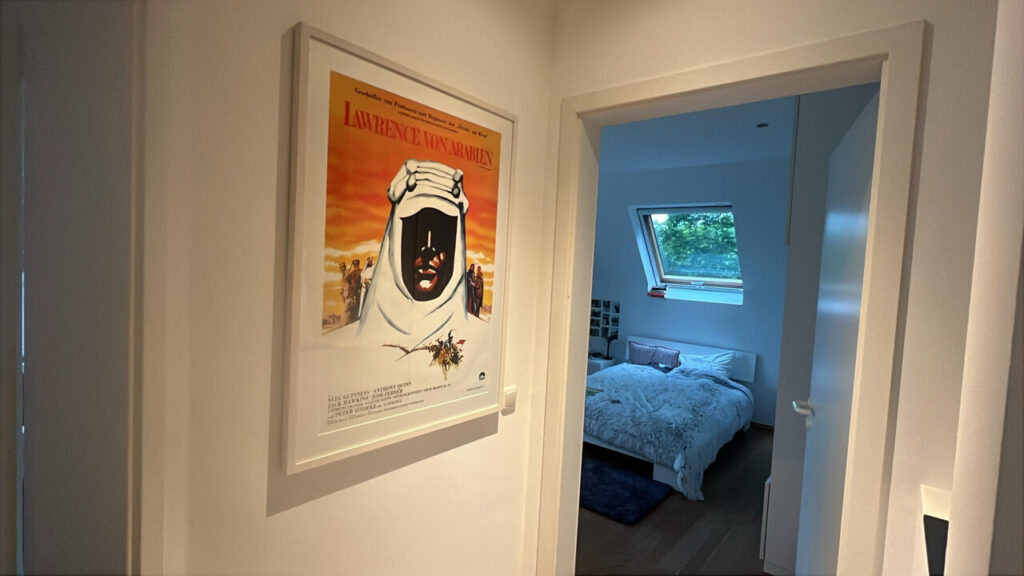
I very much liked this approach, and ever since I have considered myself a decorator, not a collector anymore. These days, I only keep posters (plus the occasional nic nac) I can display, everything else goes up for sale. My store exbition has been ‚basically‘ completed a couple of years ago, but it is quite amazing how I still manage to add yet another small exhibit every and now then. I guess that‘s further proof of my high level of expertise.
Anyway, back to the subject at hand. First of all, let‘s talk about preservation. The necessary effort is pretty much defined by the paper stock the poster was printed on. Fortunately, most vintage US Onesheets as well as West-German posters were printed on very low acidic and very stable paper. Exceptions confirm the rule, but these posters usually do not need any special treatment.
Vintage East-German movie posters were often printed on very cheap, highly acidic paper stock. Somewhat following the example of the country that printed them, you can literally watch these posters fall apart. The only way to stop this is to hand them over to a professional paper restorer for deacifying and linen- or paperbacking. Unfortunately, the associated costs are often in no relation to the value of the poster.
Vintage Mexican posters are even worse: Not only is the paper stock highly acidic, it is also super thin. More than thirty years ago, I owned a noticeable collection of vintage Mexican movie posters and I spent a lot of money to have everything properly preserved and backed on Japanese rice paper. That‘s a very thin 28 grams acid-free paper typically used by museums worldwide. Applying a poster to ‚Japanpapier‘ takes a lot more skill and expertise than linenbacking, and the handful of restorers in the US who are able to do this usually charge brutal prices.
What I personally like about ricepaper backing is that the final result still feels like a poster. Those flimsy Mexican posters feel like ‚normal weight‘ after the backing.
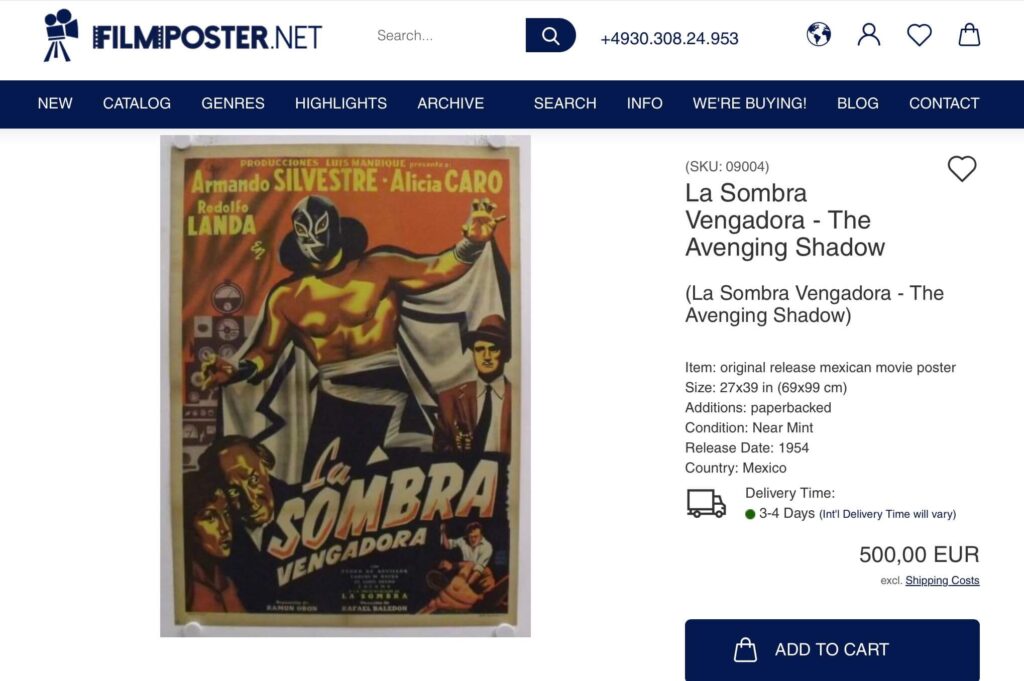
Here‘s one lone survivor from my private collection that was preserved and paperbacked in the late 1990s. Graphically, it‘s one of the Top Ten Lucha Libre movie posters out there:
Fortunately, very few posters require this type of extensive treatment. In most cases, taking proper care of your collection is much, much easier.
The first question is of course: Rolled or folded? If a poster was never folded, the perhaps not so obvious answer is, store it flat. Storing rolled posters in tubes is the most common practice of course. If you do not intend to look at your rolled posters ever again, using tubes is the way to go.
Personally, I do not recommend it as handling rolled-up posters is a perfect nightmare. So unless you‘re willing to accept the fact that you own something and never ever look want to look at them again, storing unfolded posters flat is the way to go.
If a poster has been folded, it is up to you if you want to store it flat or folded, there‘s no right or wrong here.
The main advantage of storing your posters folded is that they will take up a lot less space. Other than that, a poster does not ‚hurt‘ from being stored folded.
One more important fact: Cigarette smoke is poison for vintage paper. It‘s not only the bad smell, cigarette smoke will age the paper and make it brittle. An ozone generator (available for small money from Amazon) can take care of the smell, but of course can‘t undo any other damage.
You don‘t need to build a humidor, but naturally, posters should be stored in a somewhat controlled climate, not too dry and not too moist. Obviously, vintage posters should never be exposed to direct sunlight.
While posters do not hurt from being stored folded, most active collectors like to look at their collections every now and then, and constantly folding and unfolding posters will inevitably harm them over time. For collections that are actively cared for, a flat storage is preferable. Simple acid free cardboard folders can be easily found at any art supply.
If you want to go professional, and the value of your collection justifies the expense, you could have your folders made to your requirements by an archive supplier like Beskid Plus in Poland. At the gallery I use acid-free corrugated boards I had custom made to my required sizes:
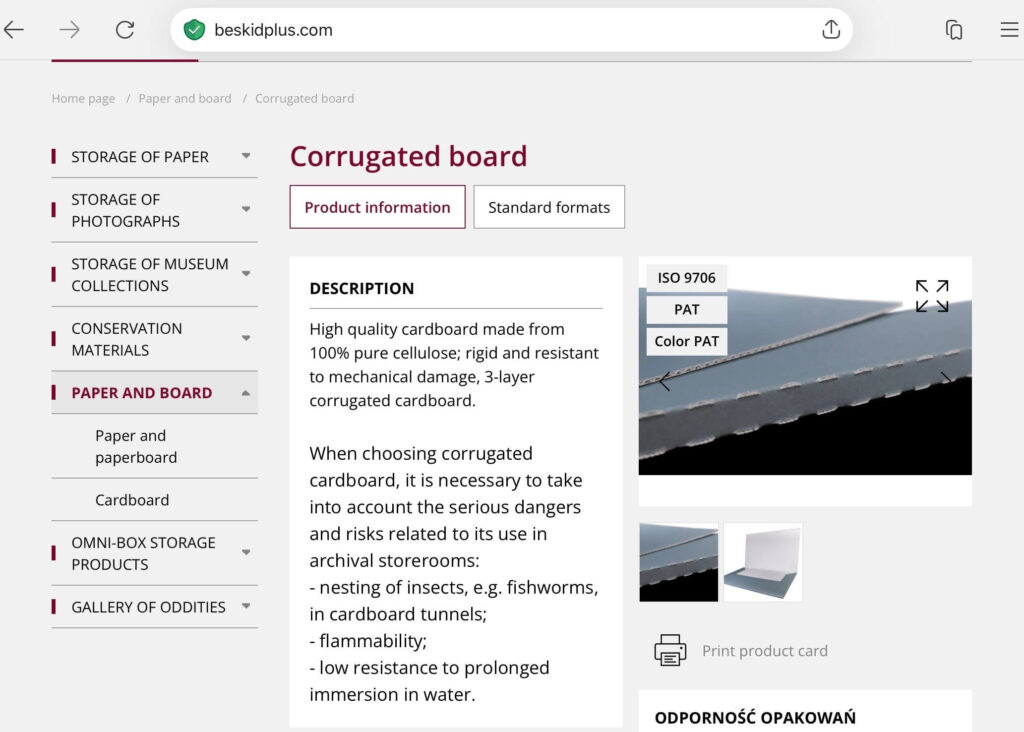
In their description, Beskid mentions that cardboard does not protect against bookworms and other insects. Which is of course true, and a major problem for large archives. In most private collections, this aspect can be perfectly neglected.
One last point regarding flat vs. folded: Once the poster has been folded, the damage has been done. I have a handful of posters that have been stored flat for decades and the fold lines have almost vanished. These are very rare exceptions. It will only work with soft, uncoated paper stock and it takes both a lot of pressure and a LONG time for the fold lines to vanish.
Starting in the late 1960s, movie posters were often printed on more or less glossy paper stock. Once these posters are folded, the top coat breaks, leaving those nasty white marks. Regardless of how long you store a glossy poster flat, this damage cannot be undone.
I frequently see ebay listings that state ‚folded but stored flat, will ship rolled.‘ Unless the poster in question is a truly vintage piece, printed on soft paper stock, there is NO advantage in shipping the darn thing rolled. On the other hand, in my experience at least 90% of the amateur and hobby sellers on ebay have NO CLUE how to pack a rolled poster properly. In the end, you will receive a folded poster with border damages and/or crush marks. Well done, ebay seller!
I have said it before, and I will say it again: Once the poster has been folded, the damage is done. So if you want to ship a folded poster that has been stored flat, fold it again, sandwich it in oversized strong cardboard, wrap it in foil in case some idiot mailman leaves it out in the rain, and place it in a cardboard book mailer. DO NOT ship a folded poster rolled unless you know exactly how to protect it.